

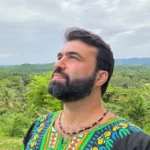
Dr. Glauber Loures de Assis is a researcher specializing in sacred plants and their traditions. He holds a PhD and a Post-Doctorate in Sociology from the Federal University of Minas Gerais (UFMG). He has authored numerous articles and book chapters and serves on the editorial board of the journal Psychedelics (Elsevier).
He is a collaborator at the Yorenka Tasorentsi Institute and the Executive Director of Jornadas de Kura, an educational center promoting dialogue between the ceremonial use of sacred plants, public education on forest medicines, and academic science. Glauber is also an activist for indigenous rights and biocultures, and serves as the Director of the Psychedelic Parenthood Community, an international network of families incorporating sacred plants into their practices.
A father of three, he lives with his wife Jacqueline Rodrigues in Santa Luzia, Minas Gerais, Brazil, where he leads the Santo Daime center Céu da Divina Estrela.
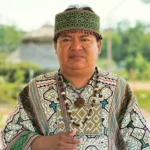
Panshin Nima Walter López is a Shipibo-Konibo leader. He was born and lives in the San Francisco Native Community, considered one of the most representative Indigenous communities in the region, located on the left bank of Lake Yarinacocha, approximately 20 km northwest of Pucallpa. He is a trained teacher, ancestral healer, activist, and advocate for Shipibo culture, ecology, and the environment. He currently serves as president of Asomashk, the association of onanyabo (Shipibo-Konibo ancestral healers), and describes himself as an eternal student of life.
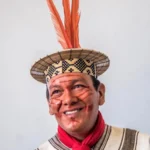
Francisco Piyãko is a leader of the Ashaninka people, recognized for his work in the defense of Indigenous rights and environmental preservation. He serves as coordinator of the Organization of Indigenous Peoples of the Juruá River (OPIRJ) and has previously served as State Secretary for Indigenous Peoples of Acre and as an advisor to the Presidency of FUNAI, coordinating actions that strengthen Indigenous leadership and the protection of the Amazon rainforest.
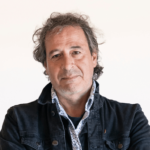
José Carlos Bouso is a Clinical Psychologist with a PhD in Pharmacology. He developed his scientific actitives while at the Universidad Autónoma de Madrid, the Instituto de Investigación Biomédica IIB-Sant Pau de Barcelona, and the Instituto Hospital del Mar de Investigaciones Médicas de Barcelona (IMIM). During this time, he developed studies about the therapeutic effects of MDMA (“ecstacy”) and psychopharmacological studies on the acute and neuropsychiatric long-term effects of many substances, both synthetic and plant origin.
José Carlos coordinates studies on the potential benefits of psychoactive plants, principally cannabis, ayahuasca, and ibogaine, with the goal of improving public health.
He is co-author of numerous scientific papers and several book chapters. He is also a member of the MARC (Medical Anthropology Research Center) at the Universitat Rovira i Virgili in Tarragona, visiting professor in the mental health program at the Faculty of Medicine of the University of São Paulo in Riberão Preto, Brazil, and vice-president of the Society of Clinical Endocannabinology (SEC).

Attend