

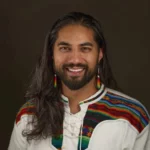
Ismail Lourido Ali, JD serves as MAPS Co-Executive Director. Ismail has been actively participating in the drug policy reform movement for over a decade, informed by half a lifetime of diverse personal experience with psychedelics and other substances.
Previously as the Director of Policy & Advocacy at MAPS, Ismail supported the design, building, and implementation of psychedelic policy reform across the country and world. Ismail co-founded and co-chaired the Board of the Psychedelic Bar Association and is licensed to practice law in the state of California.
Ismail has advised, is formally affiliated with, or has served in leadership roles for numerous organizations in the drug policy ecosystem, including Students for Sensible Drug Policy, Chacruna Institute, the Ayahuasca Defense Fund, and Alchemy Community Therapy Center (formerly Sage Institute).
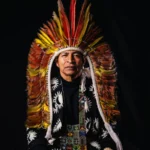
Tashka Yawanawa is one of the leading figures of the Yawanawa people, from the Rio Gregório Indigenous Territory in Acre, Brazil. Internationally recognized for his role in strengthening the cultural, spiritual, and political life of his people, Tashka has dedicated his life to protecting Yawanawa territory, valuing traditional knowledge, and fostering dialogue between Indigenous and non-Indigenous worlds. Together with his wife, Laura, he has driven pioneering initiatives in sustainability, traditional education, and Indigenous leadership in global spaces such as the United Nations and international climate conferences.

Natalia Rebollo is a human rights lawyer with a solid academic background that includes a Master’s degree in Human Rights and Humanitarian Law from Sciences Po (Paris), and specializations in International Law from American University and in Drug Policy from The Graduate Institute in Geneva.
Currently, as Co-Director of Knowledge Alliances at the ICEERS Foundation, her work focuses on building bridges between different forms of knowledge, establishing intercultural alliances at a strategic level with Indigenous leaders, and defending the rights of Indigenous Peoples. This role is an evolution of her position as Coordinator of the Legal Defense Program (ADF), a role she held for eight years, during which she defended individuals prosecuted for the use of ancestral plants in more than 48 countries.
Her leadership and the impact of her work have earned her recognition from Foro Jurídico magazine, which named her one of the most influential lawyers in Mexico.
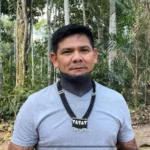
Beto Marubo, an Indigenous leader of the Marubo People, is one of the most prominent voices in the defense of Isolated Indigenous Peoples in Brazil. As a member of the Union of Indigenous Peoples of the Javari Valley (UNIVAJA), an organization dedicated to the protection and strengthening of Indigenous Peoples in the Javari Valley Indigenous Territory in the state of Amazonas—which is home to the largest number of Indigenous Peoples in Voluntary Isolation in the world—Beto plays a fundamental role in this cause.
He served as a coordinator for Funai's Ethno-environmental Protection Fronts, where he worked to safeguard the territories of these peoples, including the Javari Valley Ethno-environmental Protection Front (FPEVJ). From 2009 to 2014, he coordinated Funai’s Inspection Sector in Atalaia do Norte and, since 2017, he has represented UNIVAJA in Brasília, serving as part of its coordination.
In collaboration with Bruno Pereira, he founded the UNIVAJA Surveillance Team (EVU), which was recognized by the UN for its innovative work in protecting the Javari Valley Indigenous Land.

Attend