

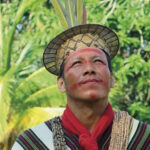
Moisés Piyãko Ashaninka is a spiritual leader and guardian of the culture and territory of the Ashaninka people. A native of the Apiwtxa community, on the banks of the Amônia River in the Brazilian Amazon, Moisés has dedicated his life to preserving Ashaninka traditions, strengthening his people’s autonomy, and protecting their territory.
An influential voice in the defense of indigenous rights, Moisés has worked tirelessly to promote sustainable practices aligned with traditional Ashaninka knowledge and values. He is also deeply involved in educational initiatives, emphasizing the importance of intercultural dialogue and the transmission of ancestral wisdom to younger generations.
Together with the Apiwtxa community, he has earned national and international recognition for innovative approaches to sustainable livelihoods and environmental management. The community was honored with the prestigious Equator Prize, awarded by the United Nations, in recognition of its exemplary work in protecting biodiversity, promoting indigenous rights, and fostering sustainable development practices rooted in traditional knowledge.
Moisés is a remarkable example of the power of indigenous knowledge to address global challenges such as climate change and biodiversity loss. His work exemplifies resilience, wisdom, and a commitment to creating a harmonious balance between people and nature.
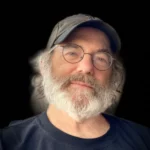
Paul Stamets, D.Sc. (Honaris causa), speaker, author, mycologist, medical researcher, and entrepreneur, is considered an intellectual and industry leader in fungi. He is the founder and owner of Fungi Perfecti, LLC (www.fungi.com), and Host Defense Mushrooms (www.hostdefense.com) supplement line.
Paul Stamets is the author of eight books. His latest book, published in June 2025, is Psilocybin Mushrooms in Their Natural Habitats. He named numerous new species of psilocybin mushrooms. In 2023, a new psilocybin mushroom species was named after him to honor his lifelong work: Psilocybe stametsii
He is an invention ambassador for the American Association for the Advancement of Science (AAAS) and was inducted into The Explorer’s Club in 2020. He has received numerous awards, including the National Mycologist Award (2013) from the North American Mycological Association (NAMA), the Gordon & Tina Wasson Award (2015) from the Mycological Society of America (MSA), The Disruptor Award from NextMed (2023), and the SynBioBeta Lifetime Achievement Award (2024).
In the latest Star Trek: Discovery series on CBS, the science officer is portrayed by an astromycologist, Lt. Commander Paul Stamets whose concepts became a central theme of this science fiction. He served as the primary guide to the mushroom documentary Fantastic Fungi, released in fall 2019 on Netflix achieving a 100% rating on Rotten Tomatoes.

Monica Gagliano, PhD, is an internationally award-winning research scientist recognized by Biohabitats as one of the “24 Most Inspiring Women of Ecology” alongside Jane Goodall, Rachel Carson, Sylvia Earle, and Terry Tempest Williams. She has lectured and held visiting roles at UC Berkeley, Stanford, Harvard, Dartmouth, and Georgetown, and her work has been featured in The New York Times, The New Yorker, National Geographic, The Guardian, Forbes, and more.
Gagliano pioneered plant bioacoustics, experimentally showing that plants emit sounds and can detect and respond to them. By demonstrating that learning and memory are not exclusive to animals, she expanded the conversation on plant cognition and reignited debates about plant subjectivity, ethics, and legal standing. Her approach blends rigorous scientific methods with ancestral knowledge—including insights from Amazonian shamans—to deepen our understanding of relationships between humans and plants. Working at the intersections of ecology, physics, law, anthropology, philosophy, literature, music, the arts, and spirituality, she rekindles wonder and invites more relational ways of living with the Earth.
She is the author of Thus Spoke the Plant (2018) and co-editor of The Mind of Plants (2021), The Language of Plants (2017), and The Green Thread (2015), alongside numerous scientific publications. A sought-after speaker at global conferences and public forums, Gagliano is currently a Research Associate Professor (Adjunct) in evolutionary ecology in Australia, a Fellow at the Center for Humans & Nature, and a member of the More-Than-Human Life (MOTH) Project. A free-roaming explorer, she bridges Western science and Indigenous knowledge to promote a holistic vision of the natural world and a profound respect for ecosystems. More at www.monicagagliano.com.
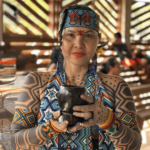
Vari, of the Puyanawa Indigenous People, is one of the main female leaders of her ethnic group. An artist, mother, and woman, she has dedicated her life to the cultural and spiritual strengthening of her community since the year 2000.
With a degree in Indigenous Education and an emphasis on languages and arts from UFAC, Vari is also committed to defending and protecting her people's rights, working both inside and outside their territory. At the Ewe Pīdu Center, where she lives with her family, she develops important reforestation projects and raises awareness about land preservation and food sustainability.
In addition, Vari is one of the founders of then Indigenous Ayahuasca Conference. She recorded the album "Dimanã Ewe Yubabu" with her community and Puwe Puyanawa, and she is currently the vice president of the Puwe Institute.

Attend