

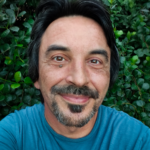
Joan Manel Vilaseca is the founder and Director of the Mandragora Foundation, a non-profit organisation devoted to curating knowledge and facilitating learning about, with and from plants in the European and Mediterranean traditions.
Before that, having graduated in audiovisuals, he spent two decades working as a film editor on fiction and documentary features, and teaching. In 2010, he started collaborating with the ICEERS Foundation, while simultaneously growing and studying many plant species, and acting as an administrator for several online communities. In 2024, he started the Mandragora Foundation with the aim of promoting European ethnobotany, working to connect those interested in practices with teacher plants around the world to our own folk practices and traditions in Europe and the Mediterranean basin. Aside of projects for a specialized library made up of several private collections and a botanical space, Mandragora is currently focused on networking initiatives and the publication of a free quarterly digital bulletin in three languages, which already features more than a dozen contributors from Italy, Poland, Romania, Slovenia, Israel, the United Kingdom, Spain and the US.
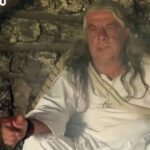
Antonio Daza Kulchavita, also known by his traditional name Jate Kulchavita Boñe, is an elder (abuelo) and wisdom keeper of the Muisca community of Ráquira, Colombia. Born in Chiquinquirá, Boyacá, in Muisca territory, he began studying Indigenous wisdom in the early 1980s, learning alongside Lakota, Arhuaco, Huitoto, and Kogui communities. He holds a degree in Anthropology from the Universidad Nacional de Colombia. In 1996, he took part in building the Maloka at the Botanical Garden of Bogotá together with Huitoto knowledge keepers, contributing to the intercultural ecological education program later implemented there.
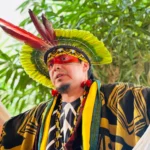
Isku Kua is the Chief (Cacique) of Nova Esperança Village, the largest of the Yawanawa communities, and the leader of the recently inaugurated Isku Vakehuhu Center for Traditional Studies and Yawanawa Language.
Having been initiated into the highest spiritual practices of the Yawanawa tradition, Isku Kua represents the future of the Yawanawa nation. He is a visionary young leader who is building the future while assimilating the knowledge of the past.
He is a dedicated leader and acts as a spokesperson for his people and for the Indigenous movement in Brazil. He frequently travels to Europe and the United States to share the message of the forest, as well as the culture and spirituality of his people. He is a speaker who has already addressed presidents, the United Nations, UNESCO, and the Inter-Religious Initiative for Tropical Forests.
His areas of focus include traditional Indigenous education, linguistic revitalization, cultural preservation, sustainable energy, regenerative agriculture, and reforestation.
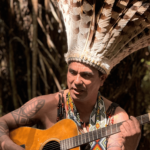
Puwe Puyanawa is a spiritual leader and a strong defender of nature and ayahuasca. With a background in Biological Sciences, he develops and coordinates environmental projects that promote the protection of life both within his territory and in other communities. He is also part of the Secretariat of Indigenous Peoples of Acre.
Recognized as one of the most important leaders of his people, he was responsible for initiating the cultural and spiritual revival of his community even before the 2000s, a period when the Puyanawa People faced the risk of losing their traditional knowledge. In addition, he was one of the pioneers and founders of the Indigenous Ayahuasca Conference. Puwe recorded the album “Dimanã Ewe Yubabu” with his community and Vari Puyanawa. Today, he is the president and founder of the Puwe Institute.

Attend