

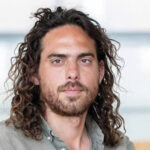
Christopher Timmermann, PhD, is a Chilean neuroscientist based in London, affiliated with University College London, where his research spans neuroscience, consciousness, and psychedelics. He previously led DMT research at Imperial College London, conducting the first neuroimaging studies of DMT — the primary psychoactive compound in ayahuasca — in healthy volunteers. His work explores the neurological effects of psychedelic experiences and their potential applications in mental health treatment, including depression, addiction, and post-traumatic stress.
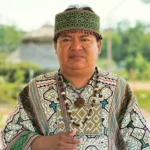
Panshin Nima Walter López is a Shipibo-Konibo leader. He was born and lives in the San Francisco Native Community, considered one of the most representative Indigenous communities in the region, located on the left bank of Lake Yarinacocha, approximately 20 km northwest of Pucallpa. He is a trained teacher, ancestral healer, activist, and advocate for Shipibo culture, ecology, and the environment. He currently serves as president of Asomashk, the association of onanyabo (Shipibo-Konibo ancestral healers), and describes himself as an eternal student of life.
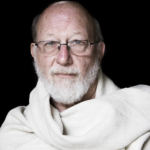
Dennis Jon McKenna (born in 1950, Colorado, USA) is an ethnopharmacologist, researcher, and writer recognized for his pioneering work in the scientific study of visionary plants and for his commitment to bridging ancestral knowledge with modern science. For over four decades, he has devoted his life to exploring the relationship between humans, sacred plants, and consciousness.
Trained in biology and botany, he earned his Ph.D. from the University of British Columbia, where he researched ayahuasca and other Amazonian preparations. He has worked at institutions such as the National Institute of Mental Health and Stanford University, and is a founding Board member of the Heffter Research Institute, an organization dedicated to the scientific study of psychedelics in therapeutic and ritual contexts. From 2001 to 2017, he taught courses in ethnopharmacology and plants in human affairs in the Center for Spirituality and Healing in the Academic Health Center at the University of Minnesota.
McKenna was also one of the principal investigators of the Hoasca Project, the first biomedical study on ayahuasca use within the União do Vegetal community in Brazil. Since 2019, he has led the McKenna Academy of Natural Philosophy, a 501(3)c nonprofit dedicated to dialogue between science, philosophy, and ancestral wisdom, promoting a renewed relationship between humanity and nature. The Academy organized and presented two landmark conferences on the Ethnopharmacologic Search for Psychoactive Drugs; ESPD50 in 2017 and ESPD55 in 2022. Ben de Loenen, Director of ICEERS, was collaborating editor of the symposium proceedings for both events.
Author of numerous scientific articles and books —including The Brotherhood of the Screaming Abyss, where he recounts his life alongside his brother Terence McKenna— Dennis is regarded as a key figure in the contemporary resurgence of psychedelic studies. His work unites academic rigor, spiritual insight, and deep respect for the Indigenous traditions that have safeguarded the knowledge of sacred plants.

Emilia Sanabria is a Franco-Colombian anthropologist, trained in the UK who has conducted ethnographic fieldwork in Brazil for over two decades. Her research draws on medical anthropology, the anthropology of science, and feminist and decolonial theory to critically examine the encounters between Western science and Indigenous and traditional knowledges. She has conducted a range of ethnographic projects on sexual and reproductive health, nutrition and food justice and the demarcations between drugs and medicines.
Between 2018 and 2024, she led the ERC-funded project Healing Encounters: reinventing an Indigenous medicine in the clinic and beyond. The project took encounters as both method and analytic to analyse the prolific contemporary reinvention of ayahuasca healing practices. It asked what healing entails when freed from the narrow confines of (Western) individual-centric frames, situating it instead within struggles for territory, collective thriving and healing justice. Attentive to the layered histories of colonialism, Healing Encounters traced how ayahuasca circulates between clinics, laboratories, neotraditional urban ceremonies and Indigenous territories. It examined the way settler colonial tactics continue to extract plants and knowledges from their multispecies webs of relations.
Emilia's forthcoming book is provisionally titled Ayahuasca is not a psychedelic: Caring for encounters in the wake of ethno-humanism.
Her current project, PhytoEncounter: Living Labs for more-than-human research, develops experimental protocols for research with – rather than about – plants in collaboration with Indigenous scientists and traditional practitioners. This work expands her longstanding commitment to speculative, participatory research methodologies oriented toward radical care and the cultivation of otherwise futures. In addition, Emilia co-leads the CERMES3 hub Health in the Age of the Global Environmental Crisis and serves on the CNRS Humanities and Social Science Ethics Board as well as its anthropology committee.
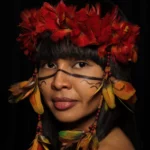
Adana Omágua Kambeba is a leader of the Kambeba People (Omágua, "People of the Waters"), originally from the Amazon. She was the first Indigenous woman from the Amazon to graduate with a medical degree from UFMG and the first woman of her people to achieve this feat in Brazil. She is notable for being the first doctor in the country to officially register both her names (Indigenous and Portuguese) on her professional license and in the records of the Federal Council of Medicine (CFM).
Adana also broke new ground by forming a CFM commission for the integration of Indigenous Traditional Medicine and Scientific Medicine. She practices in the fields of Family and Community Medicine, women's health, and humanized childbirth. She is also a Cannabis Prescriber and participates in discussions about ancestral medicine with the Psychedelic Parenthood Community and the Indigenous Ayahuasca Conference.
Currently, while in shamanic training, she seeks to promote a dialogue between traditional and Western medicine for Indigenous health, and she serves as an educator, speaker, and spiritual counselor.

Attend