

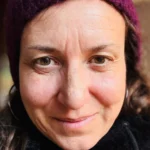
Silvia Mesturini holds a PhD in anthropology from the Free University of Brussels (ULB). She is a researcher and teacher at the Superior School of Arts ERG-Brussels. She experiments with different forms of writing, storytelling, and the creation of research tools at the crossroads between the humanities, health and social professions, indigenous knowledge, and the epistemology of science.
Her research focuses on knowledge and arts as a space of resistance against contemporary forms of extraction, colonization, technification, and the destruction of (bio)diversity.
She is currently a scientific collaborator at the Laboratoire d'Anthropologie Prospective (LAAP) and the Institut de Recherche Santé et Société (IRSS) at UCLouvain, Belgium. She has namely closely collaborated with the Shipibo Onanya José López Sánchez, from which stem these two recent publications:
José López Sánchez, Silvia Mesturini Cappo, Emilia Sanabria « Trabajar con las plantas que tienen madres. Diálogos con un onanya shipibo », FINEO editorial, 2023.
José López Sánchez, Silvia Mesturini Cappo, « Ayahuasca sans ayahuasca. Du clientélisme chamanique à une patientèle en devenir », in Drogues, Santé et Société, 23 - 1, 2025.
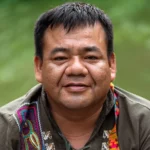
Maestro José carries a powerful, ancient lineage of well-respected Shipibo-Conibo healers, a tradition dating back centuries. His rigorous apprenticeship began at the age of seven, training extensively first under his paternal grandfather, a revered Meraya (the highest level of Shipibo healer), and subsequently under his uncle and his mother. Through this profound tutelage, he inherited the wisdom of his ancestors, the Shipibo-Conibo cosmovision, and the sophisticated practices of plant-spirit healing.
He honorably bridges the traditional and modern world. Maestro José has healed hundreds of individuals in various local rainforest communities and at Western healing centers across Peru. Today, he directs his own respected healing center, Shipibo Rao, located near Pucallpa, where he personally guides Western patients.
Possessing a unique gift for communicating his deep wisdom, he is often invited to speak at global ethnobotanical and multicultural encounters. In 2024, he co-authored the book, Plants Who Have Mothers, sharing profound insights into the plants, their healing powers, and our relationship with them from both Indigenous and Western viewpoints.
Maestro José assumes his role of service with benevolence, tenderness, and strength. His transformative work is offered with deep love and gratitude for the plant spirits that perpetually guide him.
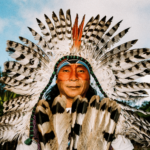
Ninawa Pai da Mata is a prominent spiritual leader of the Huni Kuin People and lives in Novo Futuro Village, within the Kaxinawá Indigenous Territory of the Humaitá River, in the municipality of Tarauacá, Acre. As a Huni Kuin leader, Ninawa has been a key figure in the revitalization of the Hãtxa Kuin language and serves as a teacher of his people’s sacred diets.
He is the author of many sacred prayers and a pioneering figure in conducting Huni Kuin spiritual ceremonies with the Forest Medicines outside Brazil. In addition to leading the renowned Eskawatã Kayawai Festival, he has participated in the Indigenous Ayahuasca Conferences since their first edition, contributing to dialogue and the strengthening of Indigenous traditions.
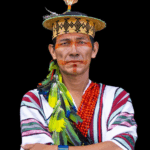
Benki Piyãko is an important leader of the Ashaninka People of the Amônia River, widely recognized as a social entrepreneur, environmental activist, and human rights defender. In addition to being an Indigenous spiritual leader, he is one of the founders of the Indigenous Ayahuasca Conference. As President of the Yorenka Tasorentsi Institute, in Marechal Thaumaturgo, Acre State, he carries out activities in reforestation of degraded areas, fish farming, and the education and awareness of local and global society about environmental protection and the strengthening of Indigenous culture.
As a guardian of the ancestral traditions of his people, Benki is committed to sharing knowledge about the forest, traditional medicine, and Ashaninka spirituality. He is an influential voice in national and international forums and coordinates local and global initiatives focused on environmental protection, including the preservation of river springs and the strengthening of Indigenous communities both in Brazil and in other countries. In addition, he is widely recognized for his wisdom, his ability to engage in dialogue, and his unwavering commitment to preserving the planet’s environmental and cultural heritage.

Attend