

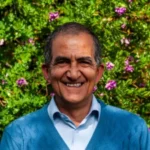
Germán Zuluaga Ramírez (Pereira, 1961) is General Director of the Center for Intercultural Medical Studies (CEMI) and Director of the Group of Studies in Traditional Health Systems (GESTS) at the Universidad del Rosario School of Medicine.
He is a surgeon-physician from Universidad del Rosario (1984), with a Master’s in Medical Sciences (2011) and a Doctorate in Epidemiology (2017) from the Universidad Autónoma de Guerrero, Mexico. For over forty years, he has combined academic and scientific activities with general medical practice in Cota (Cundinamarca). He received the UN Global 500 Award in 2002 and the Paul Feyerabend Award in 2009. He is an Honorary Member of the ICCA Consortium and a Senior Researcher recognized by Colciencias. He is also author of numerous books and scientific articles.
His work has focused on traditional health systems of indigenous, Afro-Colombian, and mestizo communities, as well as ethnobotany and medical botany. For over forty years, he has worked to conserve biodiversity, promote cultural diversity, and improve health. He has helped establish new ethical criteria for community-based research through intercultural dialogue. Recent work proposes epidemiology applied to traditional knowledge, promotes legal pluralism, and defends the right to epistemological diversity.
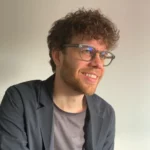
Dr. Simon Ruffell is trained in Western medicine (as a psychiatrist), research psychology (with a PhD on ayahuasca and mental health), and traditional plant medicine (as an apprentice in Shipibo healing).
He is the founder of Onaya Science, a non-profit organization researching the effects of ayahuasca in native Amazonian contexts, and CEO of Onaya, an initiative providing education and training based on Indigenous knowledge and scientific approaches. These projects are conducted in collaboration with traditional healers, Indigenous collectives, universities, and social organizations worldwide.
Simon is also a Lecturer in Psychology and Psychedelics at the University of Exeter and Medical Director of MINDS (Multidisciplinary Investigation into Novel Discoveries & Solutions), a non-profit organization exploring the role of psychedelics and consciousness practices in addressing humanity’s major challenges.
His work focuses on understanding traditional Indigenous medicines, such as ayahuasca, from both Indigenous and Western scientific perspectives, promoting an integrative and relational approach.
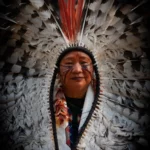
Pekãshaya, also known as Edina Shanenawa, is a recognized female leader of the Shanenawa people. She is the Chief (Cacique) of the Shane Tatxa Kaya village and a respected Medicine Woman, guardian of her people’s ancestral healing knowledge and practices. Her pioneering role is also reflected in her lineage: she was the first Indigenous woman in the state of Acre to receive the ceremonial headdress (cocar) from her father, Chief Shuayne Shanenawa, a tradition traditionally passed from father to son. In addition, she was the first woman in Acre to serve as President of the District Indigenous Health Council (Condisi). As both a political and spiritual authority, she works tirelessly in defense of the territory and ancestral medicine.
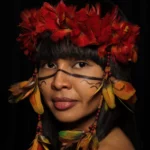
Adana Omágua Kambeba is a leader of the Kambeba People (Omágua, "People of the Waters"), originally from the Amazon. She was the first Indigenous woman from the Amazon to graduate with a medical degree from UFMG and the first woman of her people to achieve this feat in Brazil. She is notable for being the first doctor in the country to officially register both her names (Indigenous and Portuguese) on her professional license and in the records of the Federal Council of Medicine (CFM).
Adana also broke new ground by forming a CFM commission for the integration of Indigenous Traditional Medicine and Scientific Medicine. She practices in the fields of Family and Community Medicine, women's health, and humanized childbirth. She is also a Cannabis Prescriber and participates in discussions about ancestral medicine with the Psychedelic Parenthood Community and the Indigenous Ayahuasca Conference.
Currently, while in shamanic training, she seeks to promote a dialogue between traditional and Western medicine for Indigenous health, and she serves as an educator, speaker, and spiritual counselor.

Attend